
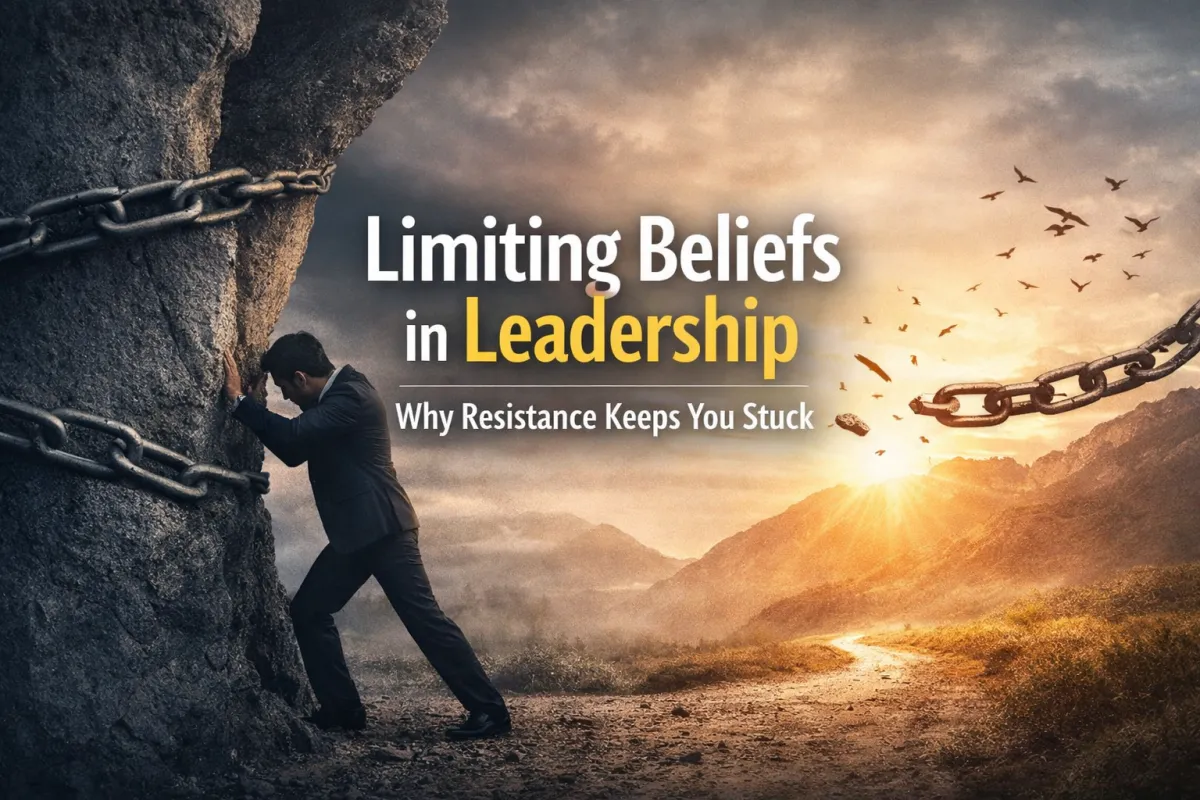
Limiting Beliefs in Leadership: Why Resistance Keeps You Stuck
Do you ever feel like you’re doing all the right things, but you’re not getting the results you’d like to?
One of the most important principles I teach leaders is this:
The results you are experiencing today are a direct reflection of the actions, beliefs, and decisions you’ve made up to this point.
Change is not just about adjusting behavior. It requires examining the beliefs driving the behavior.
The way we show up, the energy we operate in, the impression we give others, and the subtle tones in which we show up are all affected by our internal beliefs.
When it comes to fundraising, I see this principle clearly.
I once worked with a speaker who told me before an event, “The people in this room don’t have any money.” The belief shaped his entire presentation. He lacked passion. He softened the invitation. He subtly gave people permission not to give.
His belief created the result.
I see this often. When we operate from scarcity, we downplay impact and lack conviction in our ask.
When I present, I remind myself that I don’t know anyone’s capacity. I’ve seen single mothers save all year to make a significant gift. I’ve seen someone who previously gave $10 write a $10,000 check.
Belief shapes presence. Presence shapes outcomes.
If you want different results, you must be willing to change what’s happening under the surface – your mindset, your perspectives, and the behaviors those beliefs produce.
And change always starts the same way:
Awareness.
Awareness is noticing patterns you’ve repeated so long that they feel normal. It’s paying attention to the tension you feel when you try to take a new step. It’s recognizing the discomfort, the hesitation, or the subtle fight-or-flight response that shows up when you face a moment of leadership that requires courage.
A lot of leaders don’t operate strategically. They operate reactively.
Not because they are lazy or unmotivated, but because survival mode is real.
Old habits, unprocessed fears, past pain, and the pressure of responsibility can shape the way we lead without us even realizing it.
So, here are a few questions worth asking yourself:
• Am I acting from intentionality – or reaction?
• Am I making strategic decisions – or defaulting to what feels safest and most familiar?
• Am I building based on avoiding past failure – or building based on future purpose and vision?
What I Mean by “Resistance”
I use the word resistance to describe what happens when you try to move forward – and something inside you pushes back.
You may feel:
• Anxiety about making a mistake
• Fear of damaging relationships
• Imposter syndrome (“who am I to do this?”)
• Fear of rejection or failure
• Distrust in a new process because “the old ways” feel safer
Resistance is normal. Your brain prefers what is familiar. Keeping things the same takes less energy than change. And if your past taught you that change comes with pain, your body will try to protect you – even when your mind knows the next step is good.
The problem is, if we keep pushing through resistance without understanding where it comes from, it creates chronic stress. And chronic stress doesn’t just drain your energy – it impacts your health, your sleep, your clarity, and your ability to make good decisions.
Burnout doesn’t come only from doing too much.
A lot of burnout comes from living out of alignment.
If you’re asking for donations while internally believing that asking for money is wrong, you create an internal battle. If you’re building programs you don’t actually believe in, or you’re operating at a pace you know isn’t sustainable, you are setting yourself up to break.
Healthy leaders protect integrity.
They bring their external actions into alignment with their internal truths.
This Matters in Fundraising, but doesn’t stop there
Fundraising is one of the biggest places nonprofit and ministry leaders experience resistance.
Not because they don’t believe in their mission – but because they carry subconscious or limiting beliefs like:
• “Fundraising is begging.”
• “Asking for money is selfish.”
• “If God wants it done, the money will just appear.”
• “I’m not good enough or professional enough to ask.”
Here’s the truth:
If you believe fundraising is wrong or shameful, no amount of training will fix it.
You’ll sabotage yourself without meaning to – by avoiding asks, asking too small, delaying follow-up, or backing down at the moment you should be confident.
That’s why this section matters.
Because the mechanics of fundraising are simple. Once you learn them, the biggest limitation is rarely skill.
It’s belief.
If you feel limiting beliefs are holding you back, start by bringing awareness to them. Start with your current belief — and then decide what you want it to be. Just the act of telling your brain you want to change will begin creating a new pathway.
If you feel you need help moving through your internal belief systems, there are tools and techniques that can help. This is something I help many leaders navigate. I would be happy to schedule a strategy session with you and give you some specific steps for your personal situations.


