
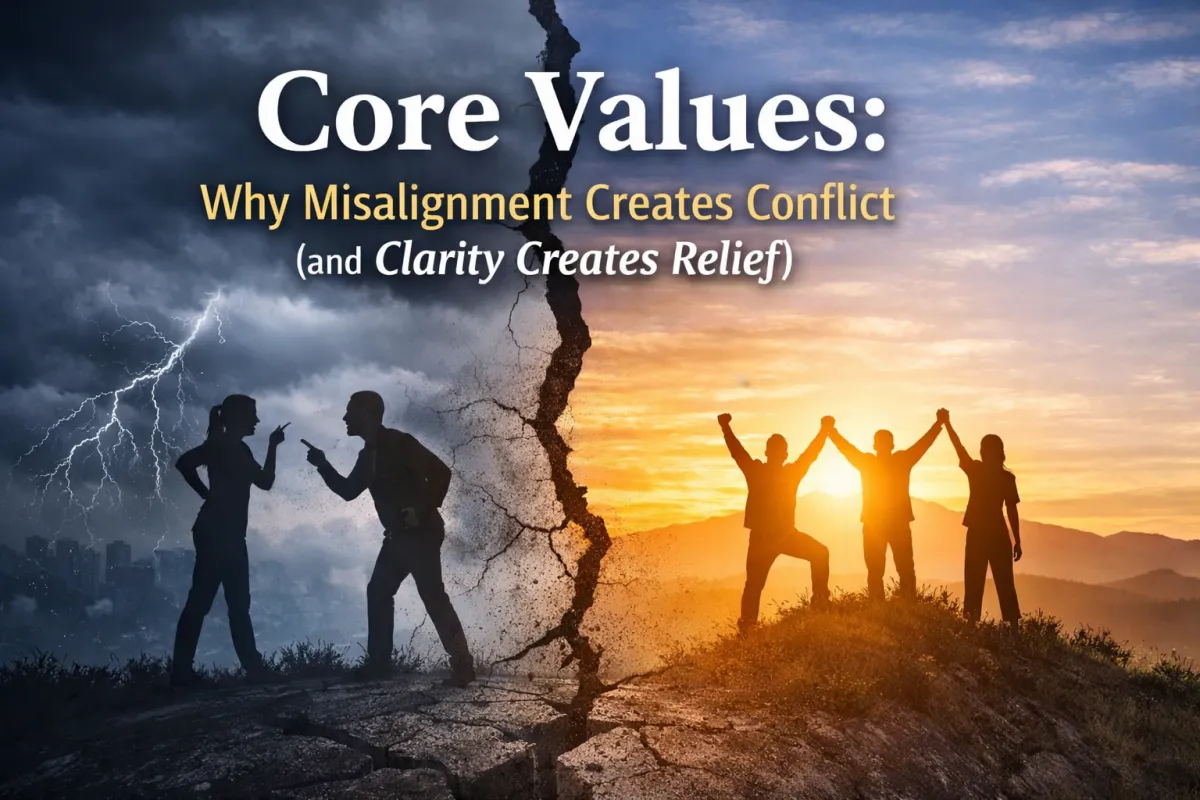
Core Values: Why Misalignment Creates Conflict (and Clarity Creates Relief)
Have you ever dealt with a difficult employee, volunteer, or even a difficult person in general? Have you ever partnered with another organization and had it end poorly after a lot of uneasy feelings and division?
I find that most of the time these conflicts are the result of misaligned values.
An organization’s core values are not meant to be a nice set of words on a wall or added to marketing materials. They are meant to define and shape organizational culture. Core values clarify the kind of people you want working with you and partnering with you, and they guide how you work, interact, and make decisions.
We talked previously about how mission defines why you exist, and vision defines where you are going. Core values are the spirit or way you show up in walking out your vision and mission. When defined well, core values don’t restrict an organization – they often bring clarity, relief, and renewed alignment to teams that have been carrying unspoken tension for years.
I don’t look at core values as right or wrong, good or bad – but many core values do conflict.
Conflicting core values will lead to conflicting personalities, goals, and visions.
Personal conflict is often created when two people with opposing values try to accomplish something together.
This means that there are some people who will not be a right fit for you to employ or allow to volunteer regularly. There will be organizations that you shouldn’t partner with.
The clearer you become on your core values, the more headache you will save yourself down the line. Well defined values can bring people together, and if they are mature enough, can allow them to work through their personal differences to accomplish something greater than themselves.
I recall two people who worked in my organization – Scott and Lynn. They experienced ongoing tension around our monthly newsletter. Scott valued timeliness and following a consistent process. Lynn valued grammar, precision, and excellence in writing. While both shared the organization’s core value of professionalism, they expressed it differently.
At the end of each month, conflict surfaced. Scott wanted the newsletter mailed on time, even if it wasn’t perfect. Lynn wanted to edit and reprint when errors were found, even if that meant a delay. Scott believed professionalism meant reliability; Lynn believed it meant accuracy.
The situation could have escalated into real conflict, but instead they chose to approach it as a values conversation rather than a personal one. Once they recognized they were aligned on professionalism, they were able to design a process that honored both strengths – timeliness and quality.
Another common place I see misaligned core values in the ministry world is between people who want to save a penny and those who value high professionalism and excellence. The first person would rather use a crooked flier, while the second person would prefer a reprint. The first person will use the cheapest copy paper, while the second will pay more for high-quality. It would be easy for each to point fingers at the other and say that they each don’t care. The first doesn’t care about quality while the second is a “bad steward” of the donations given to an organization.
When values are not explicitly designed, conflict becomes personal. When people are offended, sides are drawn, organizations stall, and missions can be destroyed. When division comes, it works against the vision that Jesus had for His body.
When you define your core values and learn to lead and manage with those, then conversations that used to feel like a personal attack now can be a conversation about the real issue – core values. You can identify the actual issues and stay away from making the conversation personal.
For most organizations creating and defining values will be a very exciting and freeing process! It will finally put words to who you are, and it will validate the way the team operates. You’ll realize what makes you a group of people unique in accomplishing your specific vision and mission. It is a very fun and motivating process.
Core values are rarely discovered in isolation. They emerge through honest conversation, shared stories, and guided reflection – especially when teams need language for tensions they’re felt but never named. I have brought many leadership teams through a process of core value creation that helps to bring this desired clarity and excitement to the work they do.
Please email [email protected] if you would like the process that I use in guiding leadership teams through the creation of their core values.


